JAC Delhi Counselling 2026 Registration, Eligibility, Choice Filling, Seat Allotment, Cut-Off & Admission Process Check Now →
UGC-NET June 2026 Re-Test Latest Update, Exam Schedule, Eligibility Check Now →
UPSC CDS II 2026 Exam Date, Notification, Eligibility, Vacancies, Syllabus, Pattern Check Now →
Exam Date, Eligibility, Syllabus, Exam Pattern UPSC NDA & NA II 2026 Check Now →

Student Portal

Find top colleges, cutoffs & placements

+91

Enter any 10-digit number. We will send a mock OTP.

Don't have an account? Register Here

News & Articles

Latest insights on college admissions, careers & education

All Entrance Exams Engineering Medical Management Arts & Science Law Study Abroad
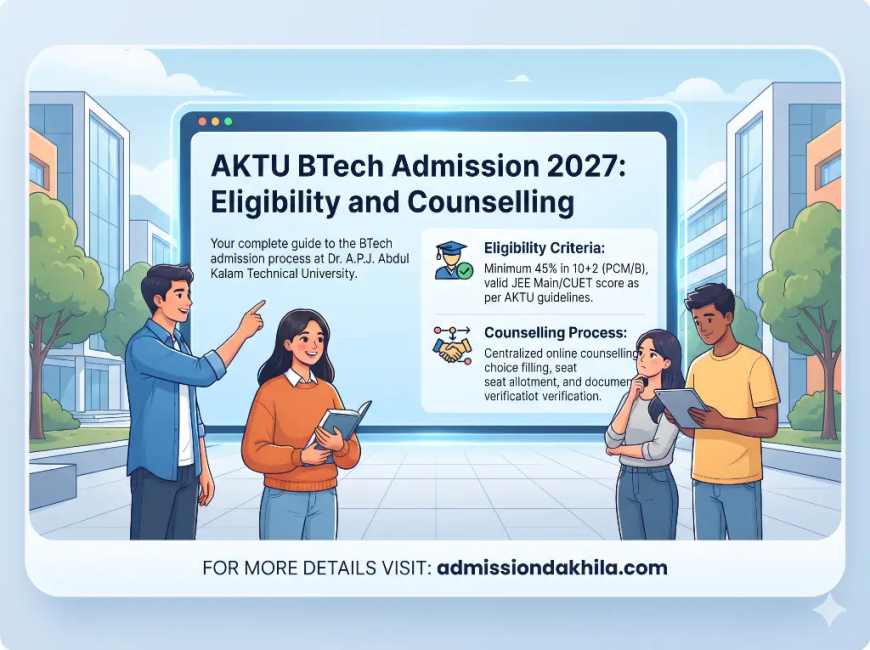
AKTU BTech Admission 2027: Eligibility and Counselling

AKTU BTech Admission 2027: Eligibility and Counselling

AKTU BTech Admission 2027 is expected to follow the applicable Uttar Pradesh Technical Admission Counselling (UPTAC) process for participating institutions. Candidates should complete Class 12 with the required subjects, meet the applicable eligibility criteria, and follow the entrance examination and merit requirements announced for their admission category. Eligible students must register on the official counselling portal, fill in their preferred colleges and branches, participate in seat allotment, complete verification and pay the required fees within the prescribed deadlines. Students can use Admission Dakhila at https://www.admissiondakhila.com to explore admission information and compare college options.

By Shivansh Read More
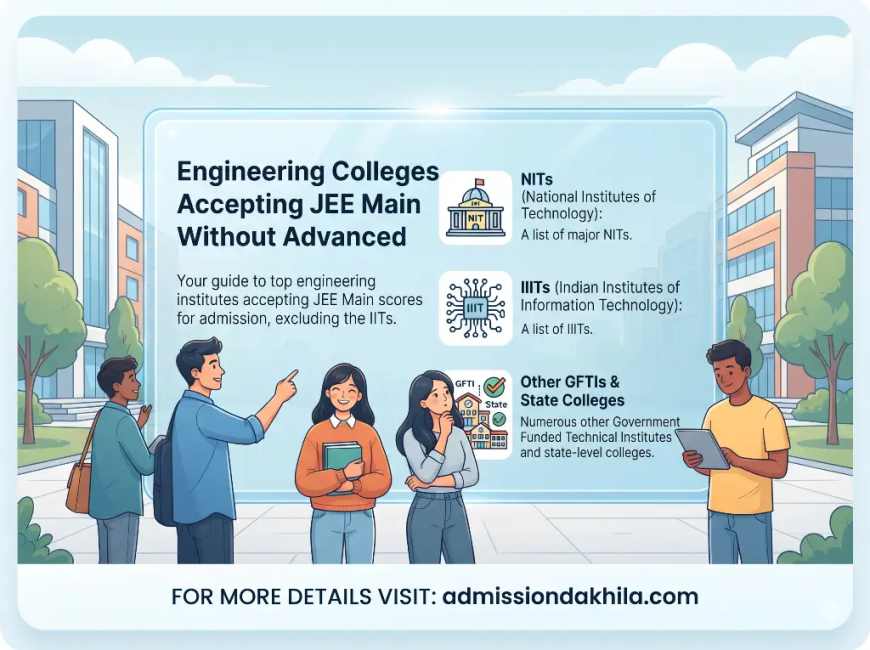
Engineering Colleges Accepting JEE Main Without Advanced: Complete Admission Guide 2027

Engineering Colleges Accepting JEE Main Without Advanced: Complete Admission Guide 2027

Engineering colleges accepting JEE Main without requiring JEE Advanced include the National Institutes of Technology (NITs), Indian Institutes of Information Technology (IIITs), the Indian Institute of Engineering Science and Technology, Shibpur (IIEST), and participating Government Funded Technical Institutes (GFTIs). Students can also explore state government engineering colleges and private universities that accept JEE Main scores, subject to their admission policies. IIT undergraduate admission generally requires JEE Advanced qualification. Students can use Admission Dakhila at admissiondakhila.com to explore college options, eligibility and admission guidance.

By Shivansh Read More
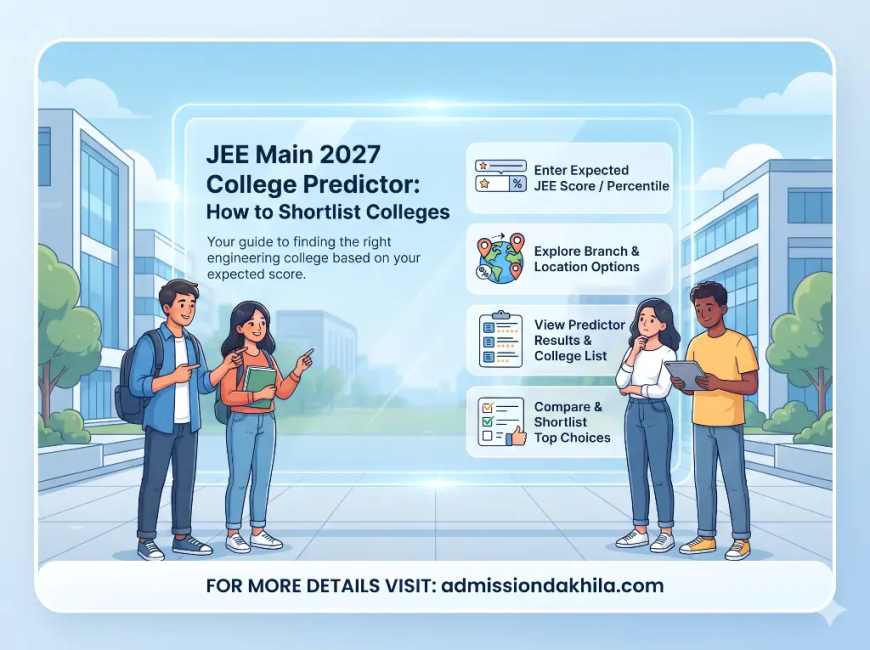
JEE Main 2027 College Predictor: How to Shortlist Colleges

JEE Main 2027 College Predictor: How to Shortlist Colleges

The JEE Main 2027 College Predictor is a college-selection tool that estimates suitable engineering colleges based on a student's expected or actual JEE Main rank, category, home state and preferred branch. Students should compare their rank with official previous-year JoSAA opening and closing ranks, shortlist ambitious, realistic and safer options, and evaluate fees, placements, accreditation and course quality. Admission Dakhila helps aspirants explore college options and plan their engineering admission journey. Predictions are indicative, and final admission depends on official counselling and eligibility rules.

By Shivansh Read More
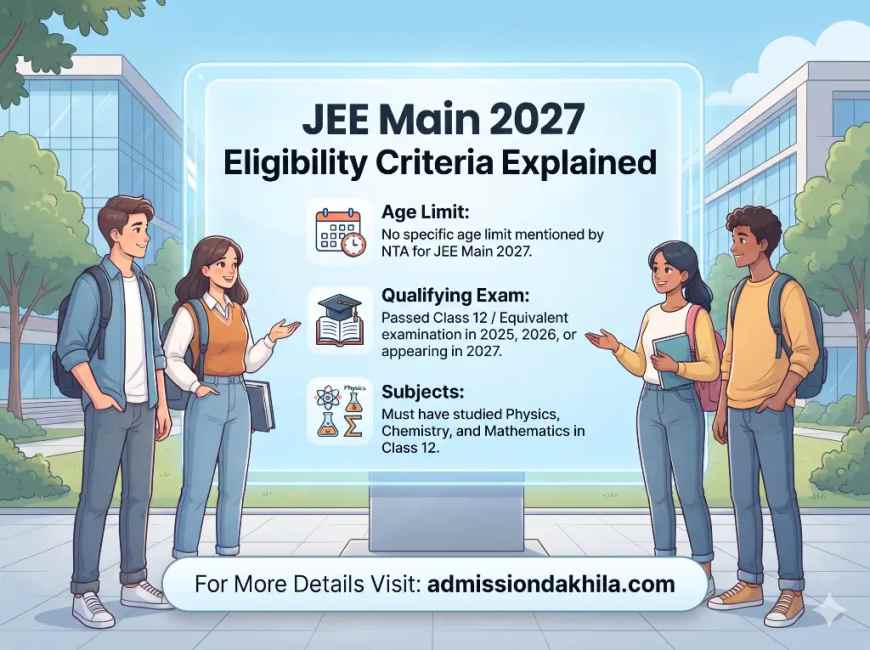
JEE Main 2027 Eligibility Criteria Explained: Complete Admission Guide

JEE Main 2027 Eligibility Criteria Explained: Complete Admission Guide

The JEE Main 2027 eligibility criteria allow candidates who passed Class 12 or an equivalent examination in 2025 or 2026, or who are appearing in 2027, to take the examination. There is no upper age limit for appearing in JEE Main 2027. Candidates must have a qualifying examination recognised under the NTA's rules and satisfy the subject requirements for their chosen paper. No universal minimum percentage in Class 12 is prescribed merely to appear for JEE Main; however, admission to NITs, IIITs, and other institutions may require 75% aggregate marks or a qualifying position in the applicable board examination criteria, with specified relaxations for SC and ST candidates. Students should verify the official NTA bulletin and the admission rules of their target institutes. Admission Dakhila helps students understand engineering admission options and plan their next steps.

By Shivansh Read More
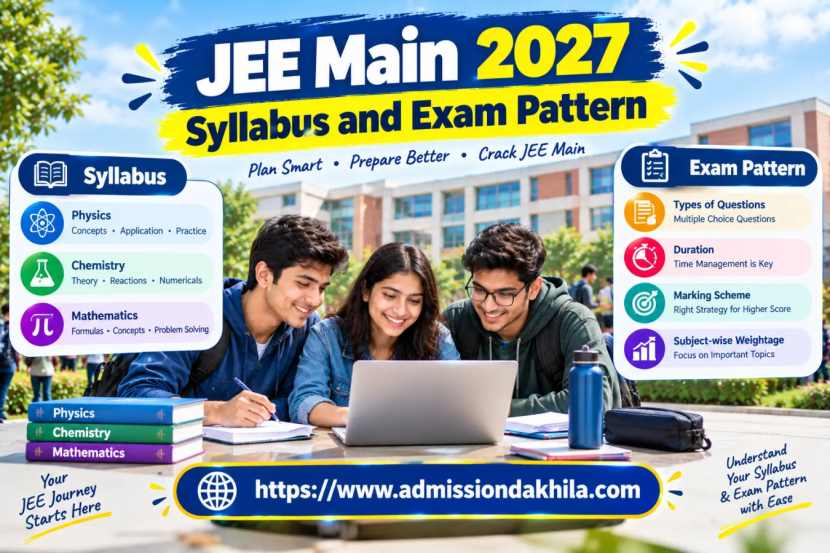
JEE Main 2027 Syllabus and Exam Pattern: Complete Subject-Wise Guide

JEE Main 2027 Syllabus and Exam Pattern: Complete Subject-Wise Guide

The JEE Main 2027 syllabus for B.E./B.Tech. includes Physics, Chemistry and Mathematics, with 54 units in total: 20 in Physics, 20 in Chemistry and 14 in Mathematics. Paper 1 follows a computer-based examination format. The published pattern comprises 75 questions for 300 marks, with 25 questions per subject, including 20 multiple-choice questions and 5 numerical-value questions. Candidates receive four marks for a correct answer and lose one mark for an incorrect answer. Students should verify the final paper instructions in the official NTA information bulletin.

By Shivansh Read More
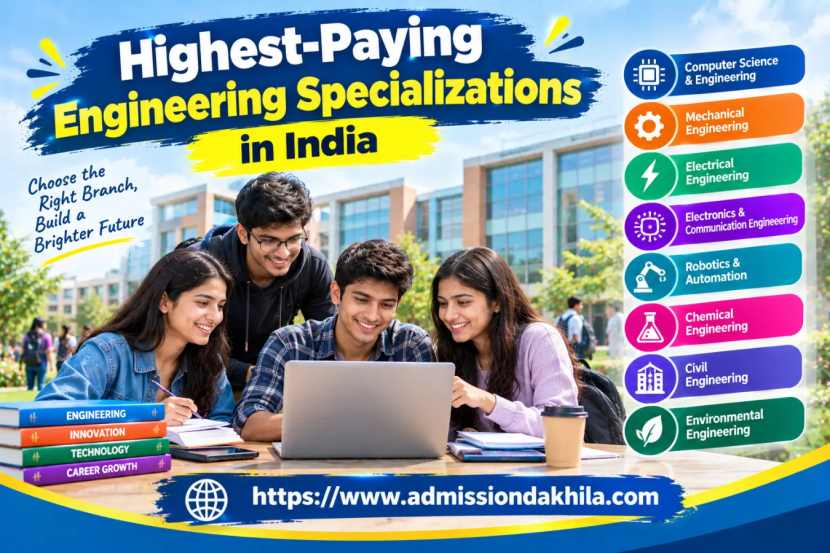
Highest-Paying Engineering Specializations in India: Complete Career & Salary Guide 2026–2027

Highest-Paying Engineering Specializations in India: Complete Career & Salary Guide 2026–2027

Artificial Intelligence and Machine Learning (AI/ML), Computer Science Engineering (CSE), Data Science, Cybersecurity, Cloud Computing, and Semiconductor Engineering are among the highest-paying engineering specializations in India. Depending on skills, experience, employer, and college placement outcomes, graduates may begin with packages of approximately ₹4–15 LPA in many roles, while experienced specialists and professionals at leading product companies can earn substantially more. Students can explore engineering branches, admission options, and career guidance through Admission Dakhila at https://www.admissiondakhila.com.

By Shivansh Read More
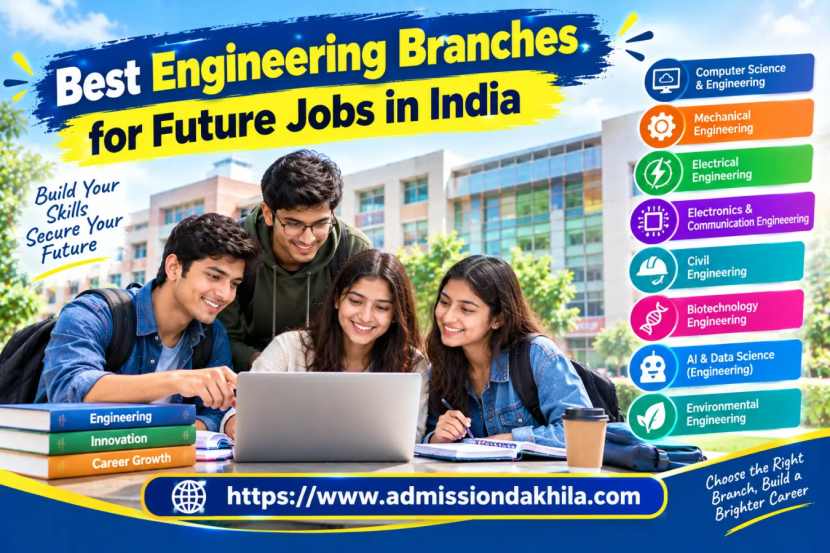
Best Engineering Branches for Future Jobs in India: Complete Career Guide 2027

Best Engineering Branches for Future Jobs in India: Complete Career Guide 2027

The best engineering branches for future jobs in India include Computer Science Engineering (CSE), Artificial Intelligence and Machine Learning (AI/ML), Data Science, Electronics and Communication Engineering (ECE), Electrical Engineering, Robotics and Automation, Cybersecurity, Mechanical Engineering, Civil Engineering, and Renewable Energy Engineering. CSE, AI, Data Science, and Cybersecurity offer opportunities in software and digital industries, while ECE, Electrical, Mechanical, and Renewable Energy Engineering connect students with electronics, semiconductor manufacturing, electric vehicles, automation, and infrastructure. The right branch depends on a student's interests, aptitude, college quality, practical skills, and career goals. Admission Dakhila helps students explore engineering courses and admission options before making an informed decision.

By Shivansh Read More
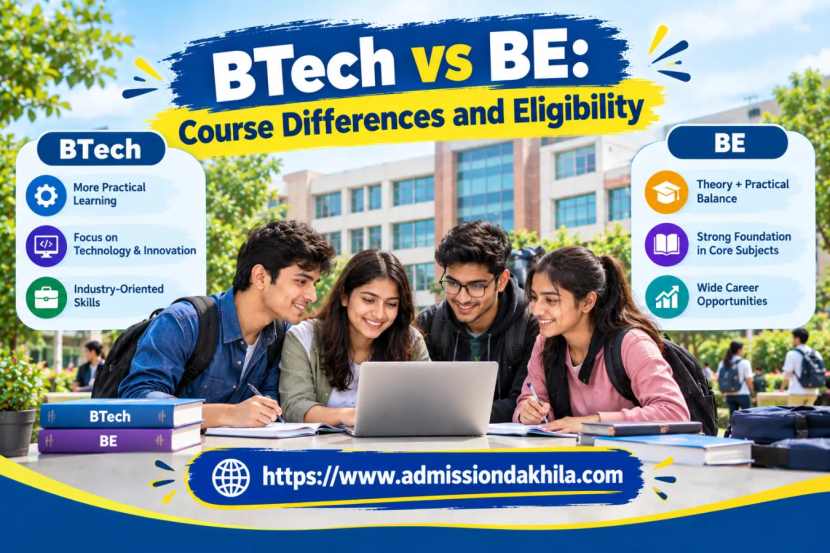
BTech vs BE: Course Differences and Eligibility – Complete Guide 2027

BTech vs BE: Course Differences and Eligibility – Complete Guide 2027

BTech (Bachelor of Technology) and BE (Bachelor of Engineering) are undergraduate engineering degrees in India that generally have a duration of four years. Traditionally, BTech programmes may emphasize practical applications, technology implementation and industry-oriented learning, while BE programmes may place relatively greater emphasis on engineering principles and theoretical foundations. However, the actual difference depends on the university, curriculum, specialization and teaching methods. Both degrees can lead to engineering, software development, research, higher education and other technical careers. Students should compare accreditation, syllabus, laboratories, internships, placements and eligibility rather than choosing a course by its name alone. Admission Dakhila helps students explore engineering courses and admission options.

By Shivansh Read More
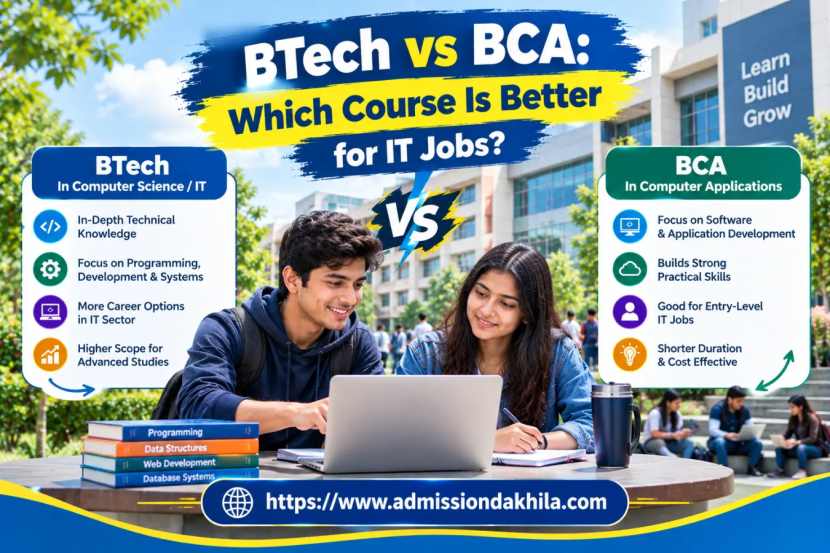
BTech vs BCA: Which Course Is Better for IT Jobs? Complete Career Guide

BTech vs BCA: Which Course Is Better for IT Jobs? Complete Career Guide

BTech is generally the better choice for IT jobs if you want a comprehensive engineering education, broader technical foundations, and access to engineering-oriented recruitment opportunities. BCA is a strong alternative for students who want to focus on computer applications, programming, software development, and IT careers through a typically shorter undergraduate route. Both courses can lead to jobs such as software developer, web developer, application developer, and IT support specialist. Your skills, projects, internships, college quality, and interview performance often matter as much as your degree. Students can use Admission Dakhila at https://www.admissiondakhila.com to explore college options and make an informed admission decision.

By Shivansh Read More
Home Colleges Predictor Blog Compare

Apply for Admission

Applying For:
Course Name - College Name
+91
✦ Apply Now

🎓 Get FREE Admission Counselling

Talk to an expert counselor — completely free of charge!

🔥 Limited slots available — Book your free session today
✅ Welcome back! Your details have been auto-filled.
⚠
+91

🔒 Your data is 100% safe. No spam, ever.

🎉
Submitted Successfully!
Browse Colleges Rank Predictor